Evaluating the Eagle Logo Sport School Mascot for Embroidery
When you download an embroidery file, you're not just getting a graphic; you're investing in a potential future product. The Eagle Logo Sport School Mascot Svg arrives as a bundle of vector and raster files, promising versatility. But how does it translate from a digital screen to a stitched, tangible item? Let’s walk through that as a designer.
The First Impression: Commanding and Classic
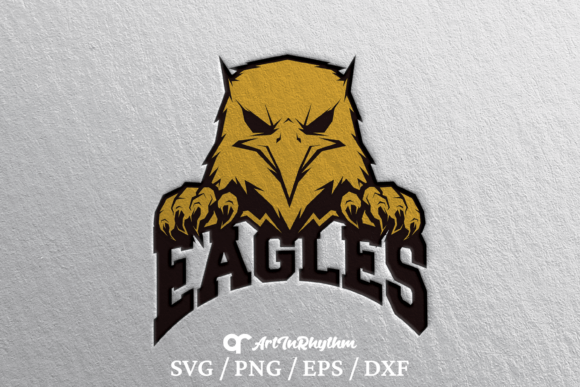
Open the file and you see a mascot designed with intent. The eagle’s posture—typically wings spread, head held high—immediately communicates a mood of strength, pride, and tradition. This isn't a casual, whimsical illustration; it's a logo built for recognition. The layout is centered and balanced, with clean outlines. The detail level is illustrative without being overly intricate, which is a crucial point for embroidery. Too much fine detail can become a muddy mess of stitches, but this design feels like it has room for thread to breathe. Its visual personality is classic Americana, athletic spirit, and institutional identity. It naturally belongs to projects where you want to convey team loyalty, school pride, or a timeless, rugged aesthetic.
A Real Project: Embroidering a Custom Sweatshirt
Imagine a client requests a set of custom sweatshirts for a local high school’s booster club. They want the official mascot logo on the left chest. This eagle design is a prime candidate. Its averaging 11-inch height at the tallest point gives you flexibility; you can scale it down for a neat chest placement or use it full-size for a bold back design. The provided SVG and EPS files are gold for digitizing software, allowing clean path manipulation. You’d likely convert this into an embroidery file with a combination of satin stitches for the bold outlines and fill stitches for the larger body areas.
On a mid-weight cotton sweatshirt, with proper stabilizer, this eagle would stitch out with strong, crisp edges. The defined wing feathers and beak would hold their shape. The resulting handmade product feels professional and official—not a generic clip-art. That visual appeal directly boosts the perceived value. A parent wearing this sweatshirt feels a sense of authentic affiliation, which builds customer trust in your craft business. It looks like the real deal.
Where This Design Excels Beyond Apparel
This logo’s utility shines across many mediums. For a small shop product like a premium canvas tote bag, the eagle becomes a standout brand element. As an embroidered patch, it could be applied to caps, jackets, or backpacks with authority. Think about holiday embroidery for a grandfather’s gift—a pillow cover with his alma mater’s mascot. It’s a personalized gift with deep emotional resonance. For baby embroidery, a scaled-down version on a blanket for a newborn whose family is steeped in that school’s culture could be a cherished heirloom. In a craft business, this file can be used to create printable mockups for your Etsy listings, showing customers exactly what the finished embroidery will look like.
Cautionary Notes: Where to Proceed with Care
Not every project is a perfect fit. The design’s success hinges on thoughtful application. On very small hoop sizes, some of the finer elements, like perhaps the eagle’s eye or talon details, might need simplification to avoid stitch crowding. Stitch density in the fill areas should be checked; too dense on thin or stretchy fabric like a t-shirt could cause puckering.
Dark fabric presents a classic challenge. The eagle’s form relies on contrast. If you’re stitching on a black sweatshirt, your thread color selection becomes paramount—bright whites, golds, or high-contrast colors will be necessary to maintain stitching clarity. Curved surfaces like caps require careful digitizing to adapt the flat design to the curvature without distortion. And for products destined for frequent washing, like kitchen towels or aprons, ensure you’re using robust threads and secure stitching so the logo withstands wear.
The Impact on Your Business and Brand
Using a well-executed design like this elevates your entire output. For an Etsy seller or apparel decorator, it contributes to brand consistency—your products look professionally crafted. It enhances giftability and recognition. A customer sees the familiar, respected mascot and immediately understands the product’s purpose. This engagement is key for turning a viewer into a buyer. For commercial embroidery projects, it provides a reliable, scalable asset. You’re not spending hours creating a base logo; you’re starting from a solid, clean graphic.
Practical Designer Notes Before You Stitch
Always, always test the design on scrap fabric first. Use the same weight and texture as your final project. This reveals how the thread colors interact with your background and whether any tiny lettering or detailed corners need adjustment.
Check the provided file formats. The bundle includes PNG, SVG, EPS, and DXF. For embroidery digitizing, the vector files (SVG/EPS) are your primary tools. Confirm your digitizing software compatibility. Crucially, before selling any finished product or digital product derived from this file, you must confirm the licensing terms. The description states the files can be used for scrapbooking, cut machines, printable decoration, and cards, but explicit permission for commercial embroidery projects may need verification from the original seller.
For presentation, create black and white mockups to see how the design reads without color. Compare it on light and dark fabric texture backgrounds in your product photos. This simple step showcases its versatility to potential customers.
In the end, the Eagle Logo Sport School Mascot Svg is more than a Crafts category Graphics product. It’s a potent design asset. When approached with a designer’s eye for real-world application, it can become the centerpiece of powerful, meaningful, and commercially viable embroidered goods. Your job is to bridge that gap between the digital file and the physical stitch, and this design provides a strong foundation for that journey.